
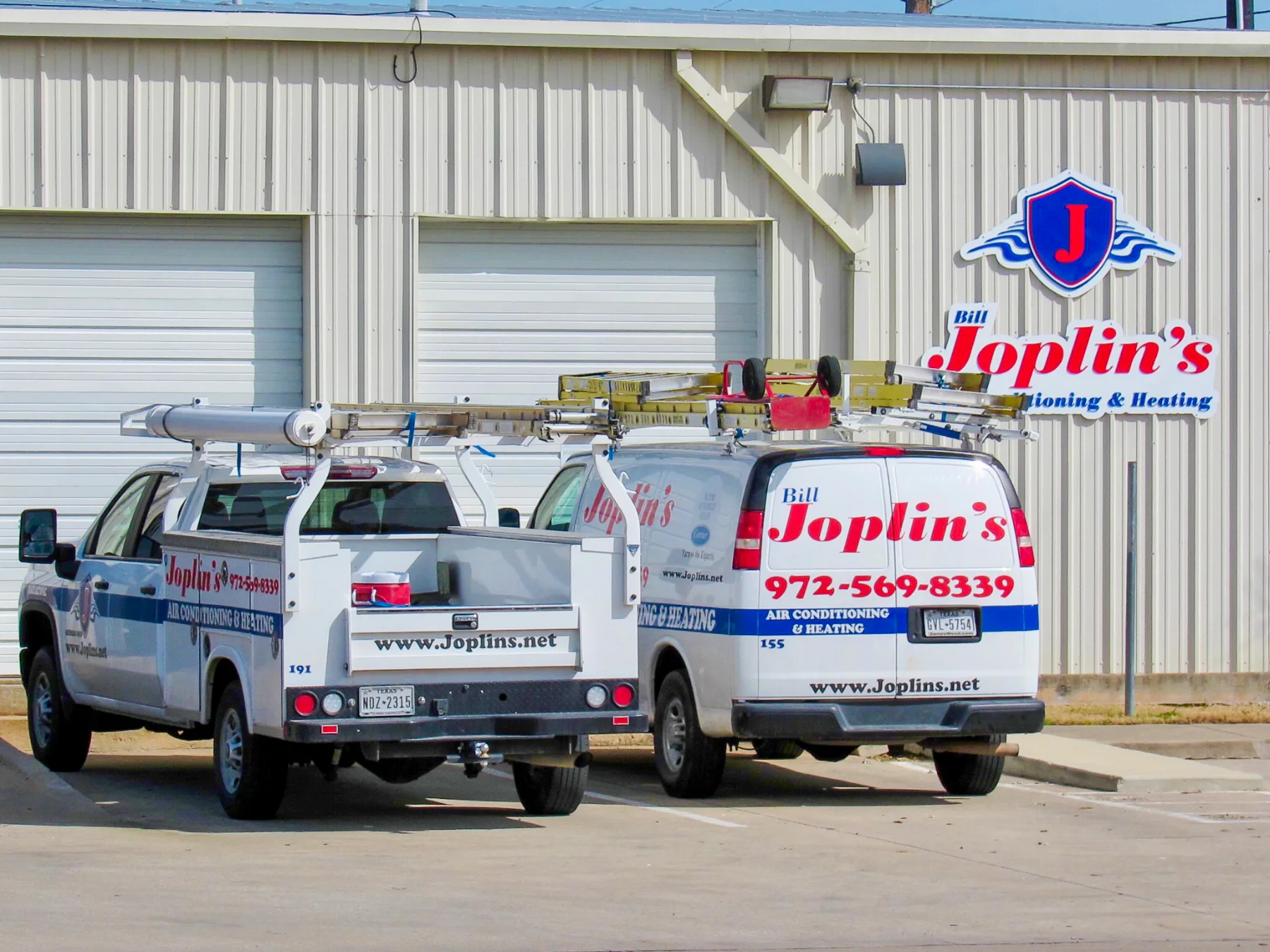
AC Repair in Lucas, TX
It’s the middle of a July afternoon in Lucas, and the thermostat reads 82 degrees inside even though the setting says 72. The outdoor unit is running, but the air coming from the vents feels warm. This is one of the most common calls we receive, and it usually points to a specific mechanical or electrical fault that can be traced, tested, and corrected. Bill Joplin's Air Conditioning & Heating has answered these calls since 1978, and we know that a hot house in North Texas is not something homeowners can wait out.
Air conditioning failures rarely happen at convenient times. They tend to appear during the hottest stretch of the season, when the system is under the most stress. Our job is to find the root cause quickly and repair it correctly the first time, so the same problem does not return two weeks later.
Common AC Problems We Diagnose in Lucas Homes
Lucas properties often sit on larger lots with longer refrigerant line sets and outdoor units exposed to full sun and blowing dust. These conditions can accelerate wear on specific components. When we arrive for an AC repair, we start with a full inspection rather than assuming the cause from the symptom alone. A weak airflow complaint could stem from a clogged filter, a failing blower motor, a frozen evaporator coil, or a duct problem, and each requires a different fix.
Over decades of service in the region, we have seen certain faults appear again and again. Recognizing the pattern lets us test the most likely causes first and save time on the diagnosis.
- Refrigerant leaks: Low charge causes weak cooling and can freeze the evaporator coil. We locate the leak, repair it, and recharge to the manufacturer specification.
- Failed capacitors: These small components start the compressor and fan motors. When they fail, the unit may hum but not start.
- Contactor and relay wear: Electrical contacts pit and corrode over time, interrupting power to the outdoor unit.
- Frozen coils: Restricted airflow or low refrigerant lets ice build up on the indoor coil and blocks cooling entirely.
- Clogged condensate drains: A blocked drain line can trigger a safety switch that shuts the system down to prevent water damage.
Each of these problems presents differently, and a careful technician does not stop at the first thing that looks wrong. A capacitor may fail because the motor it serves is drawing too much current, so we check the underlying condition as well as the failed part.
How We Approach a Repair Visit
Our repair process follows a consistent sequence. We begin by talking with you about what the system was doing before it stopped working properly. That conversation often narrows the possibilities before we open a single panel. A unit that trips a breaker points us toward electrical faults, while a unit that runs constantly without cooling suggests refrigerant or airflow issues.
From there we move to hands-on measurement. We check voltage and amperage at the compressor and fan motors, read refrigerant pressures on both the high and low sides, measure the temperature split across the evaporator coil, and inspect the electrical components for heat damage or corrosion. These readings tell us how the system is actually performing rather than how it should perform on paper.
Once we identify the fault, we explain what we found and what the repair involves before we begin the work. You will know what is wrong and what needs to happen to fix it. We carry common parts on our trucks, so many repairs can be completed in a single visit without a return trip.
Technical Details That Guide the Work
Getting a repair right depends on precise numbers, not guesswork. A properly charged residential system running R-410A refrigerant should show a specific pressure relationship between the suction and liquid lines based on the outdoor temperature. When those pressures fall outside the expected range, they point us toward the problem. High head pressure with normal suction, for example, often indicates a dirty condenser coil or a failing condenser fan motor.
The temperature split across the evaporator coil is another key measurement. A healthy system typically cools the return air by 16 to 22 degrees as it passes through the coil. A split much smaller than that suggests low refrigerant or poor airflow, while a much larger split can indicate restricted airflow that risks freezing the coil. We use these figures together, not in isolation, to reach an accurate diagnosis.
Electrical testing matters just as much. We measure the microfarad rating of capacitors against their labeled value, because a capacitor that has drifted below tolerance will strain the motor even if it has not failed completely. Replacing a weak capacitor before it fails outright can prevent a compressor from overheating and burning out, which is a far more expensive repair.
Repair or Replace: Making the Right Call
Not every failing system is worth repairing, and we tell you honestly when that point has arrived. Most residential air conditioners are built for 12 to 15 years of service in the North Texas climate. As a unit approaches that age, the cost of repeated repairs can start to rival the cost of a new, more efficient system. We help you weigh the decision based on the facts of your equipment.
Several factors influence the recommendation. Consider the following when a repair estimate feels significant:
- Age of the equipment: A system past 12 years may not justify a major repair like a compressor or coil replacement.
- Frequency of breakdowns: Repeated failures in a single season signal a system nearing the end of its service life.
- Refrigerant type: Older units using discontinued refrigerants become costly to recharge.
- Efficiency rating: A newer high-efficiency system can lower monthly cooling costs enough to offset part of the replacement.
- Cost of the repair: When a single repair approaches a large share of a new system’s value, replacement often makes more sense.
When repair is clearly the better path, we complete it and get your home comfortable again. When replacement is the wiser investment, we explain why and let you make the informed choice. We do not push equipment you do not need.
Serving Lucas and the Surrounding Communities
Lucas homeowners value quiet, comfortable homes on properties that often demand more from their cooling systems than a standard suburban lot. We understand the local building styles, the effect of the summer heat on outdoor equipment, and the airflow challenges that come with larger floor plans. That familiarity helps us diagnose faster and repair more accurately.
As a leading residential HVAC contractor, Bill Joplin's Air Conditioning & Heating provides heating and cooling services to McKinney and the surrounding communities, including Mckinney, Allen, Melissa, Prosper, Fairview, Lucas, Plano, and Princeton, TX. Since 1978, we have built our reputation on straightforward diagnostics, honest recommendations, and repairs that hold up through the hardest part of the Texas summer.
Schedule Your AC Repair
When your air conditioner stops keeping up, a fast and accurate repair keeps your home safe and comfortable. Whether the problem is a failed capacitor, a refrigerant leak, a frozen coil, or an electrical fault, our team has the tools and experience to find it and fix it. We treat every call with the same attention to detail, from a minor adjustment to a major component replacement.
Bill Joplin's Air Conditioning & Heating stands ready to help Lucas residents restore reliable cooling. Reach out to schedule a repair visit, and let a team that has served this region since 1978 get your system running the way it should.
Upgrade your HVAC system today with little to no down payment!
Learn how you extend the life of your system and save on utility bills.