
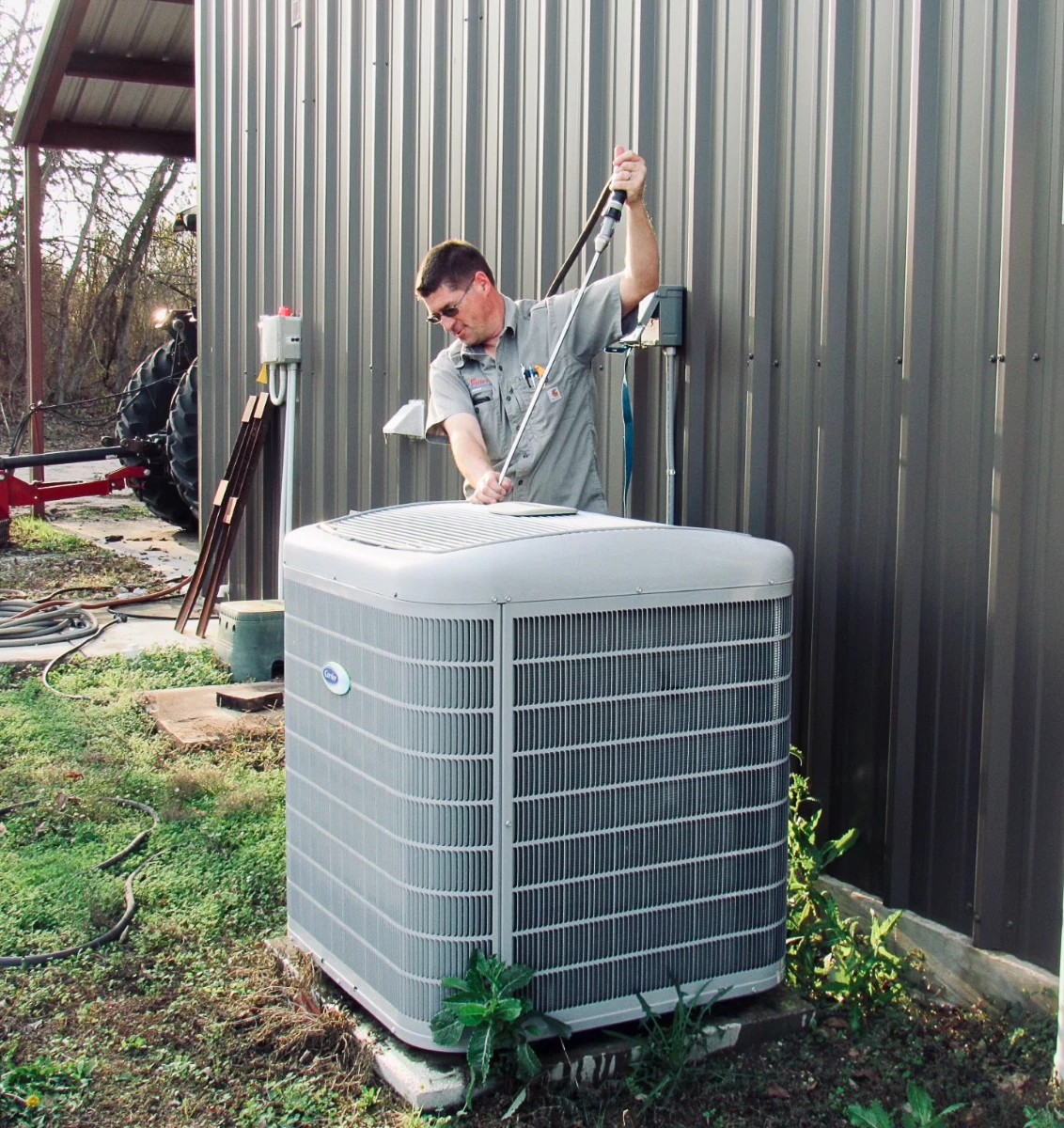
AC Installation
When your AC system isn’t delivering the cold air you want, it might be time to consider a replacement option. The truth is, our equipment doesn’t age like a fine wine. Time makes all units less efficient, effective, and reliable. While it might be tempting to limp your AC device (or unit) for another year, consider your home comfort, air quality, potentially reoccurring costly repairs, and higher energy costs.
Choosing the right air conditioning system for your home is one of the most significant mechanical decisions you will make as a homeowner. An undersized unit will run constantly and never quite cool your living space, while an oversized one will cycle on and off too quickly, leaving humidity behind and wearing out its components before their time. If your current system is more than a decade old, struggling to keep up during the hottest weeks, or driving up your energy bills month after month, a properly engineered installation can change the way your home feels every single day. Since 1978, Bill Joplin's Air Conditioning & Heating has helped families across North Texas replace aging equipment with systems that are correctly sized, professionally installed, and built to last.
Sizing and Load Calculation Done Correctly
The foundation of every good AC installation is an accurate load calculation. Rather than guessing based on square footage alone, we perform a Manual J load calculation that accounts for the specific characteristics of your home. This includes the amount and quality of insulation, the number and orientation of windows, ceiling height, the local climate, the tightness of the building envelope, and even the direction your home faces. Each of these factors changes how much heat your home gains during a Texas summer, and each affects the tonnage of cooling capacity you actually need.
Getting this calculation right matters more than most people realize. A system that is too large will short-cycle, meaning it reaches the thermostat setpoint quickly and shuts off before removing enough moisture from the air. The result is a home that feels cold and clammy rather than cool and comfortable. A system that is too small never reaches the setpoint on the hottest days, running continuously and consuming excess electricity. By matching capacity precisely to your home, Bill Joplin's Air Conditioning & Heating delivers steady temperatures, better humidity control, and lower operating costs across the life of the equipment.
Understanding SEER2 and Equipment Efficiency
Modern air conditioners are rated by SEER2, the current measure of seasonal energy efficiency. A higher SEER2 rating means the system produces more cooling per unit of electricity consumed. Entry-level systems typically start around 14 to 15 SEER2, while high-efficiency models can reach well beyond 20 SEER2. The right choice depends on how long you plan to stay in the home, your budget, and how much you value long-term energy savings against upfront investment.
Efficiency is not only about the outdoor condenser. A complete system includes the indoor evaporator coil, the air handler or furnace blower, and the refrigerant line set that connects them. When these components are properly matched, the system performs at its rated efficiency. Mismatched equipment, on the other hand, can undercut performance and void manufacturer warranties. During every installation, we confirm that the indoor and outdoor units are compatible and rated to work as a designed pair, so you receive the full efficiency you paid for.
Our Installation Process Step by Step
A professional installation follows a disciplined sequence. Skipping steps or rushing the work leads to problems that surface months or years later. Here is how we approach each project from start to finish:
- In-home assessment: We inspect your existing equipment, ductwork, electrical service, and refrigerant lines to identify anything that must be corrected before the new system goes in.
- Load calculation and system design: We calculate the exact cooling capacity your home requires and recommend equipment that fits your comfort goals and budget.
- Old equipment removal: We safely recover the existing refrigerant according to EPA regulations and remove the old condenser, coil, and any components being replaced.
- New equipment placement: We set the outdoor condenser on a level, stable pad and position the indoor coil and air handler for proper airflow and drainage.
- Line set and electrical connections: We connect refrigerant lines, evacuate the system to remove moisture and non-condensables, and wire the unit to code.
- Charging and commissioning: We charge the system to the manufacturer’s specification, verify airflow, and test every operating mode before we consider the job complete.
Each of these stages is documented so you understand exactly what was done in your home. When the installation is finished, we walk you through the new thermostat, explain how to maintain the system, and answer any questions you have about operation and warranty coverage.
Ductwork, Airflow, and the Details That Matter
A new air conditioner can only perform as well as the ductwork it feeds. Leaky, undersized, or poorly designed ducts waste a substantial portion of the cooling your system produces, sending conditioned air into attics and wall cavities instead of your living space. Before completing an installation, we evaluate your duct system for leaks, restrictions, and imbalances. When needed, we seal joints, add return air capacity, or modify runs so that every room receives the airflow it was designed to have.
We also pay close attention to the condensate drainage system, the refrigerant charge, and static pressure across the coil. An improper charge is one of the most common causes of poor performance and premature compressor failure, yet it is invisible without proper gauges and measurement. By verifying subcooling and superheat during commissioning, Bill Joplin's Air Conditioning & Heating confirms that your new system runs within the manufacturer’s tolerances, giving you dependable cooling and a longer equipment lifespan.
Applications for Different Homes and Situations
No two homes have identical cooling needs, and installation strategy changes with the situation. A single-story ranch with an open floor plan may perform beautifully with a straightforward split system, while a two-story home often benefits from zoning or a second system to keep upstairs bedrooms comfortable. Older homes with limited attic access may require creative equipment placement and duct modifications. Newer, tightly sealed homes may need additional attention to ventilation and humidity control to feel fresh rather than stale.
Homeowners who are building an addition, finishing a bonus room, or converting a garage frequently discover that their existing system cannot handle the added load. In these cases we evaluate whether the current equipment can be extended or whether a dedicated system for the new space makes more sense. For families replacing a failed unit in the middle of summer, we prioritize fast, clean installations that restore comfort without cutting corners. Whatever the circumstance, the goal remains the same: a system that cools evenly, runs efficiently, and lasts for years.
Serving McKinney and the Surrounding Communities
As a leading residential HVAC contractor, Bill Joplin's Air Conditioning & Heating provides heating and cooling services to McKinney, TX, and the surrounding region, including Mckinney, Allen, Melissa, Prosper, Fairview, Lucas, Plano, and Princeton, TX. Our long history in the area means we understand the demands that North Texas summers place on cooling equipment, and we design every installation to stand up to that heat year after year. From load calculations and equipment selection through commissioning and follow-up, we handle each step with the care that has defined our work since 1978.
When you are ready to replace an aging air conditioner or install a system in a new space, we are here to guide you through the choices and deliver an installation done right the first time. Reach out to Bill Joplin's Air Conditioning & Heating to schedule an in-home assessment and take the first step toward more reliable, more efficient comfort in your home.
Upgrade your HVAC system today with little to no down payment!
Learn how you extend the life of your system and save on utility bills.