
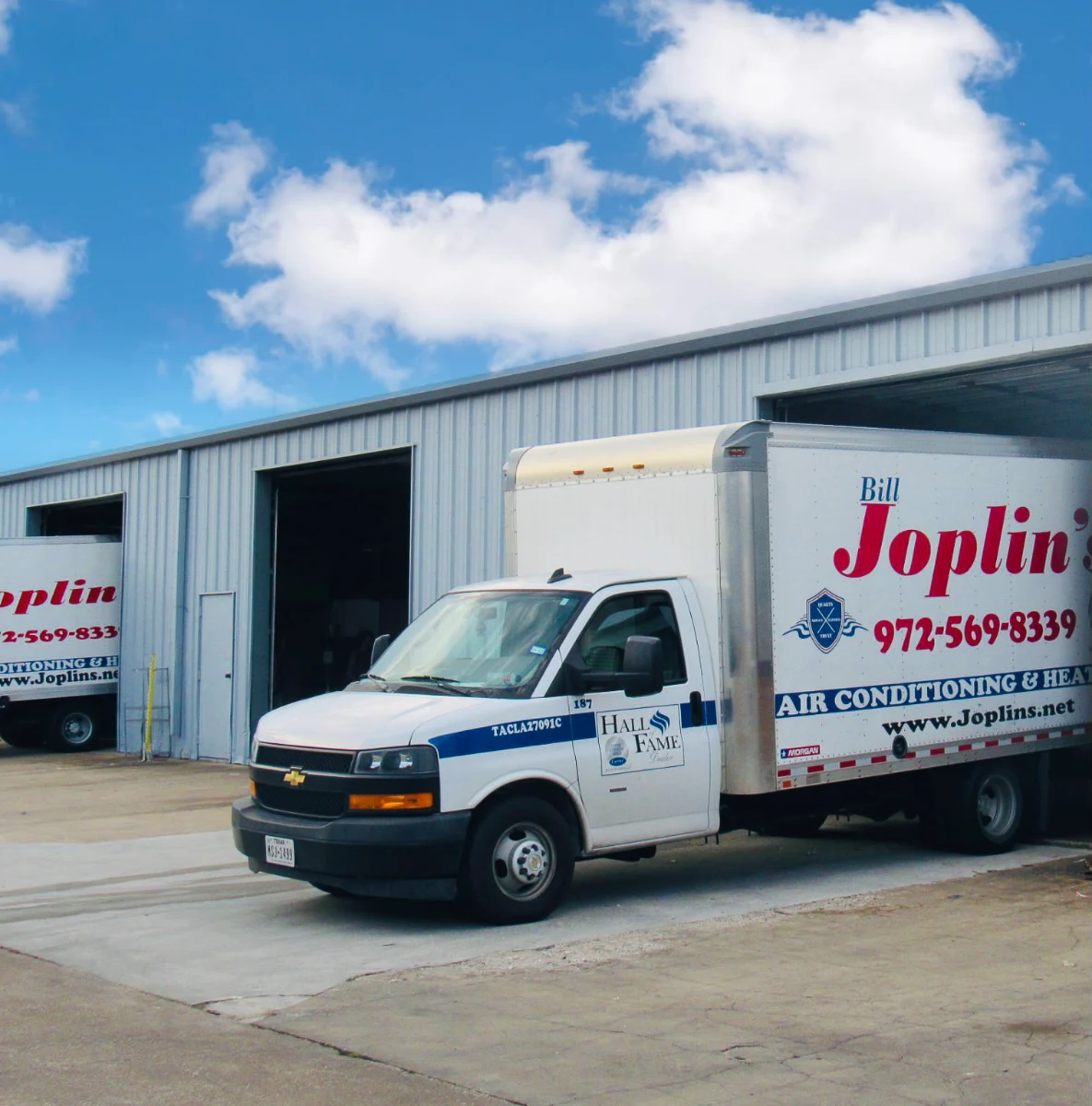
Heating Service in Blue Ridge, TX
A furnace that runs but never quite warms the back bedrooms, a pilot that will not stay lit on the coldest morning of the year, a strange rattle from the supply ducts every time the blower kicks on—these are the small signals that a heating system needs attention. In Blue Ridge, TX, where winter nights can drop well below freezing and the wind moves freely across open land, a reliable heater is not a luxury. It is the difference between a comfortable home and a long, cold week waiting for a repair.
Bill Joplin's Air Conditioning & Heating has provided heating service to Blue Ridge and the wider North Texas region since 1978. Over those decades we have worked on nearly every type of residential heating equipment, from older gas furnaces to modern high-efficiency condensing units and heat pumps. This page walks through what heating service involves, what problems we see most often, and how we approach the work so your system runs safely through the season.
Signs Your Heating System Needs Service
Most heating problems do not appear all at once. They build over weeks or months, and the earlier you catch them, the smaller the repair tends to be. A furnace that once heated the house in ten minutes but now takes half an hour is telling you something. So is a unit that cycles on and off rapidly, a burner flame that flickers yellow instead of steady blue, or a utility bill that climbs without any change in how you use the system.
Other warning signs are easier to ignore because they seem minor. A faint burning smell when the heat first turns on in fall is normal—it is dust burning off the heat exchanger. But a smell that lingers, or one that carries a sharp chemical edge, warrants a call. The same goes for uneven heating from room to room, which often points to duct leaks, a failing blower motor, or an undersized system straining to keep up. When you notice any of these, scheduling service before the problem grows saves both money and discomfort.
Our Heating Service Approach
When we arrive for a heating service call in Blue Ridge, we start by listening. You know your home better than anyone, and the symptoms you describe—when they started, how often they happen, which rooms are affected—guide where we look first. From there, we move into a systematic inspection rather than guessing at the cause.
A thorough heating service visit generally covers the following:
- Combustion and ignition check: We inspect the burners, igniter or pilot assembly, and gas valve to confirm the system lights reliably and burns cleanly.
- Heat exchanger inspection: We examine the heat exchanger for cracks or corrosion, since a compromised exchanger can allow carbon monoxide to enter the living space.
- Airflow and blower assessment: We check the blower motor, capacitor, and belt where present, and measure airflow to confirm the system moves the correct volume of air.
- Electrical and control testing: We verify the thermostat, safety switches, limit controls, and wiring connections operate within specification.
- Filter and duct review: We replace or clean filters and look for duct leaks or restrictions that force the system to work harder than it should.
Once we understand the condition of the equipment, we explain what we found in plain language. If a repair is needed, we describe the options and let you decide how to proceed. We do not push replacement when a repair will serve you well, and we do not patch a failing system when replacement is genuinely the smarter long-term choice. That honest approach is part of why homeowners across Mckinney, Allen, Melissa, Prosper, Fairview, Lucas, Plano, and Princeton, TX have trusted Bill Joplin's Air Conditioning & Heating for more than four decades.
Common Heating Repairs in Blue Ridge Homes
The heating equipment in Blue Ridge homes varies widely. Older properties often run gas furnaces installed a decade or more ago, while newer construction frequently uses heat pumps or high-efficiency condensing furnaces. Each type brings its own common failure points, and knowing them helps us diagnose faster.
Gas furnaces most often need attention for ignition problems, dirty flame sensors, clogged burners, or worn blower components. A flame sensor coated in residue will shut the system down as a safety measure, which many homeowners mistake for a major failure when a cleaning restores full function. Heat pumps, by contrast, can lose efficiency when the reversing valve sticks, when the outdoor coil frosts over and the defrost cycle fails, or when the refrigerant charge drifts out of range. In every case, correct diagnosis matters more than swapping parts, because a symptom like weak heat can come from several very different causes.
Technical Details That Affect Heating Performance
Good heating service goes beyond fixing the immediate complaint. It accounts for how the whole system performs together. Airflow, for example, is measured in cubic feet per minute, and a furnace starved for air will overheat and trip its high-limit switch long before the house is warm. Temperature rise—the difference between the return air and the supply air—should fall within the range printed on the equipment rating plate, usually somewhere between 40 and 70 degrees depending on the model. When temperature rise runs too high, the system is often fighting restricted airflow. Too low, and the burner may be undersized or the blower oversized for the ductwork.
Gas pressure is another specification that shapes both safety and efficiency. Manifold pressure that runs too high wastes fuel and can shorten the life of the heat exchanger, while pressure that runs too low leaves the home short on heat. We use a manometer to confirm these values fall within manufacturer tolerances rather than assuming the factory setting is still correct after years of operation. On heat pumps, we verify refrigerant charge by measuring superheat and subcooling, since even a small deviation reduces heating capacity noticeably on cold days. These measurements let us leave a system not just running, but running the way its designers intended.
Why Regular Maintenance Matters
Most of the emergency heating calls we take could have been prevented with routine maintenance. A dirty filter, a loose electrical connection, or a slowly failing capacitor rarely causes trouble in October. It causes trouble in January, on the coldest night, when the system is under the heaviest load. Annual service catches these small issues while they are still small and inexpensive to correct.
Regular maintenance also protects the value you already invested in your equipment. Manufacturers design furnaces and heat pumps to last well over a decade, but that lifespan assumes the system receives reasonable care. Components that run dirty or misadjusted wear faster and fail sooner. A yearly tune-up keeps efficiency high, keeps your utility bills predictable, and gives us a chance to spot developing problems before they leave you without heat.
Schedule Heating Service With Us
Bill Joplin's Air Conditioning & Heating serves Blue Ridge, TX along with McKinney and the surrounding communities across Mckinney, Allen, Melissa, Prosper, Fairview, Lucas, Plano, and Princeton, TX, offering both residential and commercial HVAC service. Whether your furnace stopped working entirely or you simply want a seasonal inspection before the cold sets in, we bring the same careful, methodical approach to every visit.
Heating problems tend to worsen with time and cold weather, so the best time to address a concern is when you first notice it. Reach out to schedule your heating service, and let our team keep your home warm, safe, and comfortable through the season.
Upgrade your HVAC system today with little to no down payment!
Learn how you extend the life of your system and save on utility bills.