
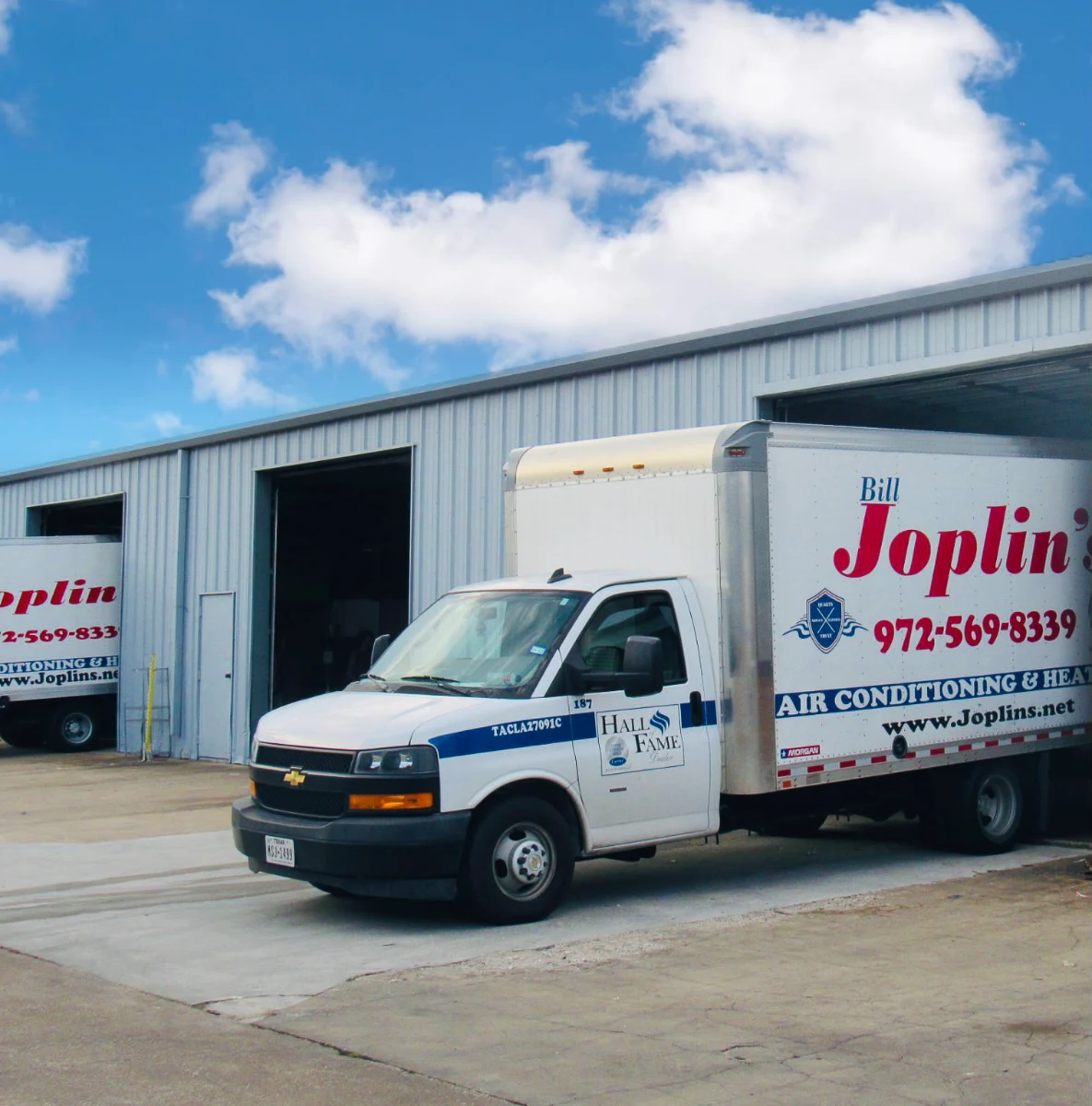
Heating Replacement in Lowry Crossing, TX
When your furnace starts short-cycling on a cold January morning, or your energy bills climb higher each winter even though your home never feels warm enough, you are likely looking at a system that has reached the end of its service life. In Lowry Crossing, TX, where winter nights can drop well below freezing, a failing heater is more than an inconvenience. It is a comfort and safety concern that deserves a straight answer, not a patchwork of repairs that never quite hold. That is where we come in. Bill Joplin's Air Conditioning & Heating has been helping homeowners make smart heating decisions since 1978, and heating replacement is one of the services we handle from start to finish.
Replacing a heater is a bigger decision than a routine repair, so this page walks you through when replacement makes sense, what the process looks like, and the technical details that separate a good installation from a mediocre one. Our goal is to give you enough information to feel confident before a single tool comes out of the truck.
When Replacement Makes More Sense Than Repair
Not every heating problem calls for a new system. A worn igniter, a bad capacitor, or a clogged flame sensor are common repairs that can bring an otherwise healthy furnace back to life. The decision shifts toward replacement when the cost and frequency of repairs start to outpace the value of keeping the old unit running. A furnace that needs a major component every winter is quietly telling you that the rest of the system is aging at the same pace.
Age is the clearest factor. Most gas furnaces are designed for roughly 15 to 20 years of service, and heat pumps often reach the end of their useful life around the same window. Once a unit passes that point, efficiency drops, parts become harder to source, and the risk of an unexpected failure during a cold snap rises. If your heater is old enough to be pushing those limits, planning a replacement on your own schedule is far better than reacting to a breakdown at the worst possible time.
- Rising energy bills: An older furnace loses efficiency as internal components wear, so you pay more each year for the same amount of heat.
- Frequent repairs: When two or three service calls stack up in a single season, the repair costs begin to rival the price of a modern, efficient system.
- Uneven heating: Rooms that never warm up evenly often point to a system that can no longer keep pace with the home.
- Strange noises or odors: Banging, rattling, or a persistent burning smell can signal a heat exchanger or blower nearing failure.
Choosing the Right Heating System for Your Home
Once replacement is on the table, the next step is selecting a system that fits your home and your habits. Lowry Crossing homes range from older properties with existing ductwork to newer builds designed around modern equipment, so there is no single right answer. We look at the whole picture before recommending anything. A furnace that is too large will short-cycle, wear out faster, and heat unevenly, while one that is too small will run constantly and struggle on the coldest nights. Correct sizing is the foundation of everything that follows.
The main options for most homes are a gas furnace or a heat pump, and each has a place depending on your priorities. Gas furnaces deliver strong, fast heat and perform reliably even when outdoor temperatures plunge. Heat pumps move heat rather than generate it, offering excellent efficiency across the mild-to-moderate temperature range that dominates North Texas winters, and they double as your cooling system in summer. For homes without existing ductwork, or additions that are hard to tie into a central system, ductless equipment can be a practical alternative worth discussing.
Efficiency ratings matter here. Gas furnaces are measured by AFUE, or Annual Fuel Utilization Efficiency, which tells you how much of the fuel becomes usable heat. A furnace rated at 95 percent AFUE converts almost all of its fuel into warmth, while an older unit might waste a quarter of what it burns. Heat pumps are rated by HSPF for heating and SEER2 for cooling, and higher numbers mean lower operating costs over the life of the system. We help you weigh the upfront investment against the long-term savings so the choice reflects real value, not just a spec sheet.
Our Heating Replacement Process
A replacement done well is methodical. Rushing the job or skipping steps is how installations end up with airflow problems, noise complaints, or premature wear. Our approach follows a clear sequence designed to get the details right the first time.
- In-home assessment: We evaluate your current system, ductwork, insulation, and the layout of your home to understand what the space actually needs.
- Load calculation and sizing: Using established methods, we calculate the heating load rather than simply matching the old unit’s capacity, which corrects sizing mistakes from past installs.
- System recommendation: We present equipment options that fit your home and budget, explaining the trade-offs in plain language so you can decide with confidence.
- Removal and installation: Our technicians safely disconnect and remove the old unit, then set and connect the new system with attention to gas lines, electrical connections, venting, and condensate handling where applicable.
- Testing and commissioning: Before we leave, we verify airflow, check combustion or refrigerant performance, confirm thermostat operation, and make sure every safety control functions as designed.
Throughout the work, we treat your home with care, protecting floors and work areas and cleaning up thoroughly when the job is done. A new heating system is a long-term investment, and the quality of the installation determines how well that investment pays off for years to come.
Technical Details That Affect Performance
The equipment is only part of the equation. How the system integrates with your home decides whether it delivers the comfort and efficiency it was designed for. Ductwork is a frequent culprit in disappointing results. Leaky or undersized ducts can rob a brand-new furnace of a significant share of its output before the warm air ever reaches your rooms, so we inspect and address duct issues as part of a complete replacement rather than treating them as an afterthought.
Venting and combustion air are equally important on gas systems. High-efficiency furnaces produce cooler exhaust and require dedicated PVC venting along with proper condensate drainage, since the process of extracting extra heat creates moisture that must be routed away safely. Getting the venting configuration right is both a performance and a safety matter, and it is one of the areas where professional installation truly earns its keep. Airflow balance, refrigerant charge on heat pumps, and correct thermostat pairing all fall under the same principle: small details, done correctly, add up to a system that runs quietly, efficiently, and reliably.
Why Homeowners Trust Bill Joplin's Air Conditioning & Heating
Since 1978, we have built our reputation as a leading residential HVAC contractor serving McKinney, TX and the surrounding communities, including Lowry Crossing and neighboring towns across Mckinney, Allen, Melissa, Prosper, Fairview, Lucas, Plano, and Princeton, TX. That longevity is not an accident. It comes from doing careful work, standing behind it, and treating each home as if it were our own. When you invest in a heating replacement, you want a company that will still be here to support the system down the road.
Beyond heating replacement, we offer a full range of residential and commercial HVAC services, from AC repair and furnace repair to AC service and AC installation. That means whatever comfort issue arises, whether it is the peak of summer or the coldest week of winter, you have a single trusted team to call. If your heater is showing its age or has already failed, reach out to Bill Joplin's Air Conditioning & Heating and let us help you get warm, efficient, and reliable heat back into your Lowry Crossing home.
Upgrade your HVAC system today with little to no down payment!
Learn how you extend the life of your system and save on utility bills.