
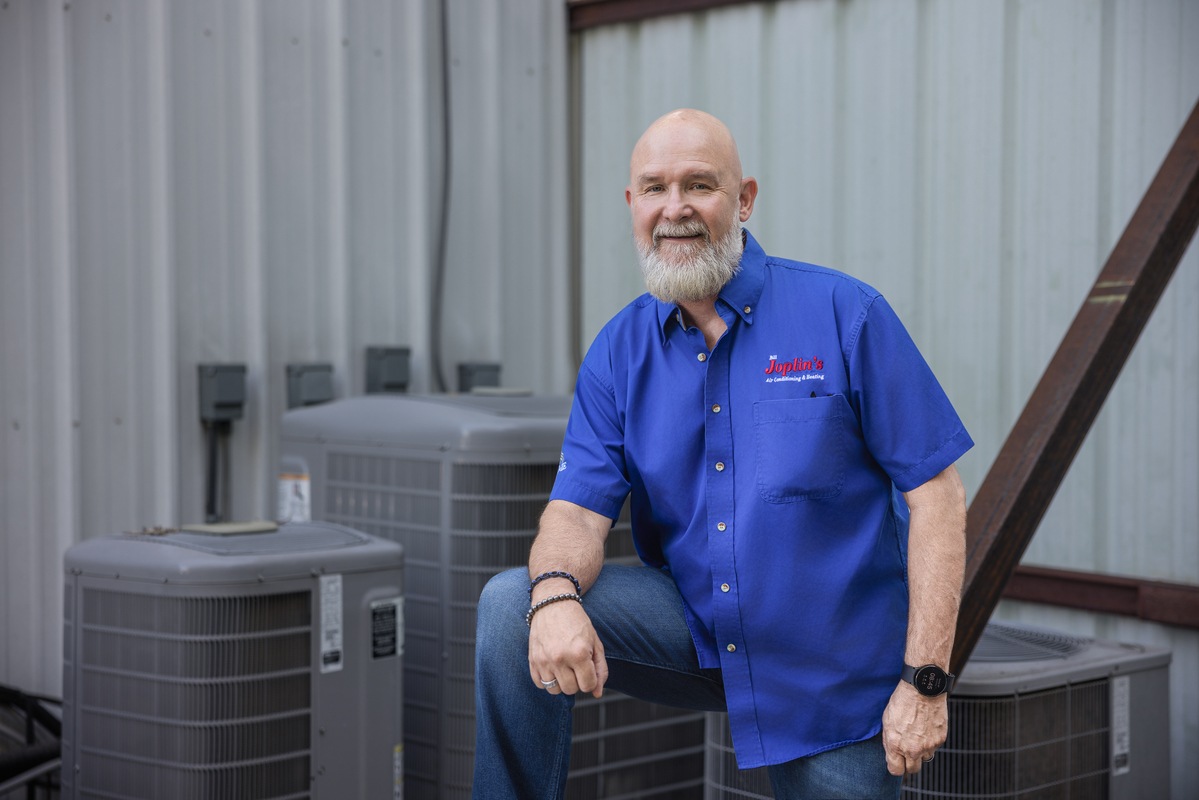
Ductless HVAC Repair in Lucas, TX
An indoor air handler that hums but blows only room-temperature air often points to a refrigerant charge problem, a failed capacitor, or a fouled coil. Ductless mini-split systems in Lucas homes carry dozens of small, interconnected parts, and when one fails, the entire zone it serves loses heating or cooling. Because these systems place electronics inside the wall-mounted head, the outdoor condenser, and the line set that joins them, accurate repair depends on knowing exactly where a fault begins. That is the work Bill Joplin's Air Conditioning & Heating has performed since 1978, serving Mckinney, Allen, Melissa, Prosper, Fairview, Lucas, Plano, and Princeton, TX as a leading residential HVAC contractor.
How Ductless Systems Fail
A ductless mini-split moves heat between an outdoor compressor and one or more indoor heads using refrigerant flowing through insulated copper lines. Each head contains its own blower, evaporator coil, thermistor, and control board. When any of these components degrade, the symptoms are frequently subtle at first. A head might short-cycle, drip water onto the floor, or display a flashing error code that means little to a homeowner.
Many faults trace back to the connections between components rather than the components themselves. A loose communication wire, a partially clogged condensate drain, or a small refrigerant leak at a flare fitting can produce the same complaint: weak airflow or no temperature change. Because the outdoor unit and each indoor head must speak to one another electronically, a single break in that dialogue can shut down an otherwise healthy system.
The Faults We Correct in Lucas Homes
Lucas properties often sit on larger lots with additions, garages, or bonus rooms that rely on a single mini-split head for comfort. When that one zone stops working, the room becomes unusable quickly. The problems we return to again and again include a defined set of failures.
- Refrigerant leaks: tiny losses at flare joints or a corroded coil that starve the system and cause it to ice over.
- Failed capacitors and fan motors: parts that prevent the outdoor unit from starting or the indoor blower from turning.
- Clogged condensate lines: blockages that trigger safety shutoffs or leak water down interior walls.
- Faulty control boards: electronic failures that produce error codes and erratic operation.
- Sensor and thermistor drift: temperature readings that fall out of range and confuse the unit’s logic.
Each of these requires a different tool and a different method. A refrigerant leak calls for electronic detection and a nitrogen pressure test, while a control board fault demands careful voltage measurement across the board’s terminals. We arrive prepared for all of them.
Our Repair Method Step by Step
We begin every visit by listening to what the homeowner has noticed, then we confirm the complaint at the equipment. A structured diagnosis prevents guesswork and keeps repair costs from climbing.
- Read the error history: we retrieve stored fault codes from the indoor and outdoor boards to narrow the search.
- Measure electrical values: we test voltage, amperage, and capacitor health against factory specifications.
- Check refrigerant pressures: we connect gauges to confirm the charge and look for signs of a leak or restriction.
- Inspect airflow and drainage: we clear the condensate path and confirm the blower moves air freely across a clean coil.
- Verify the repair: we run the system through a full cycle and recheck temperatures before we leave.
This sequence lets us separate a cheap fix from a serious one early, so you know what the repair involves before we proceed. When a part must be replaced, we match it to the manufacturer’s specification rather than substituting a generic component that may shorten the system’s life.
Technical Details That Guide the Work
Ductless systems typically operate on R-410A refrigerant and depend on inverter-driven compressors that adjust speed to match demand. That variable operation makes them efficient, but it also means a weak capacitor or a marginal power supply can cause faults that a simple on-off system would never show. We measure supply voltage under load and confirm the line set is properly insulated and free of kinks that restrict flow.
Correct condensate handling matters just as much. A head mounted high on a wall relies on gravity or a small pump to move water outside, and a slope of even a fraction of an inch affects drainage. We confirm these details on every call.
Homeowners across Mckinney, Allen, Melissa, Prosper, Fairview, Lucas, Plano, and Princeton, TX trust Bill Joplin's Air Conditioning & Heating to restore their ductless comfort quickly and correctly. Ask about our current private inventory sale offering 15% off. Reach out today to schedule your ductless repair.

Upgrade your HVAC system today with little to no down payment!
Learn how you extend the life of your system and save on utility bills.